Human Design Essentials Guide: Understanding the Basics of Human Design
Have you ever felt like you’re trying to fit into a mold that just wasn’t made for you? Like you’re constantly swimming against the current, wondering if there’s a better way to navigate life? Well, that’s exactly where Human Design comes in. It’s like a cosmic blueprint tailored just for you, revealing how you’re wired to make decisions, interact with the world, and ultimately, live your most authentic life.
If you’re curious about this fascinating system but don’t know where to start, you’re in the right place. Let’s dive into the human design essentials guide and unpack the basics together. Trust me, it’s a journey worth taking.
What Is Human Design Anyway?
Imagine combining astrology, the I Ching, the Kabbalah, the Chakra system, and quantum physics into one neat package. That’s Human Design in a nutshell. It’s a modern tool created by Ra Uru Hu in 1987, designed to help you understand your unique energetic makeup.
At its core, Human Design is about self-discovery. It shows you how your energy flows, how you make decisions, and how you can live in alignment with your true nature. Think of it as a manual for your life, but one that’s written in the language of your soul.
Here’s a quick breakdown of the key components:
Type: Your energetic blueprint (there are five main types).
Strategy: How you’re designed to interact with the world.
Authority: Your inner decision-making compass.
Centers: Energy hubs in your body, similar to chakras.
Profile: Your personality archetype.
Gates and Channels: Specific traits and energies you carry.
Each piece fits together to create a detailed map of you.
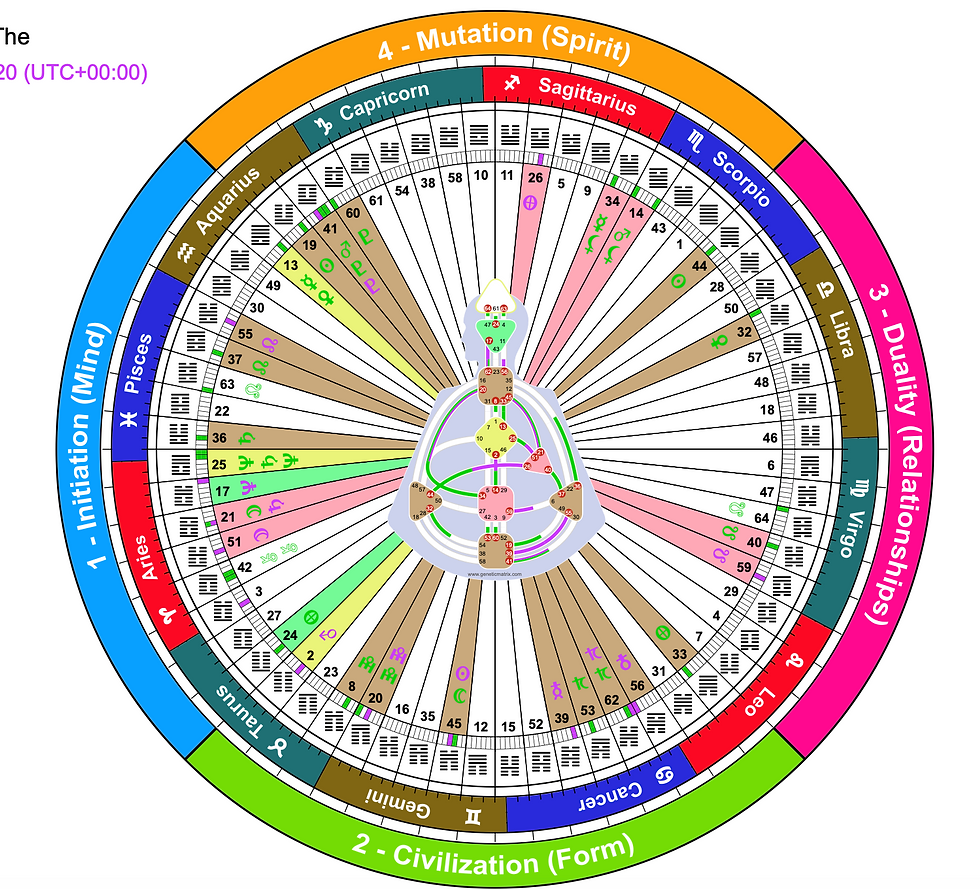
Exploring the Human Design Essentials Guide
Now, let’s get into the nitty-gritty of the human design essentials guide. Understanding these basics will give you a solid foundation to start your journey.
The Five Types: Who Are You?
Your Type is the cornerstone of your design. It tells you how your energy interacts with the world and how you’re meant to engage with others. Here’s a quick rundown:
Manifestors - The initiators. They’re here to start things and get the ball rolling. If you’re a Manifestor, you might feel a strong urge to act independently and create waves.
Generators - The builders and doers. They have sustainable energy and thrive when they’re doing work they love. Ever heard the phrase “respond, don’t initiate”? That’s their mantra.
Manifesting Generators - A hybrid of Manifestors and Generators. They’re fast movers who can multitask but need to check in with their gut before jumping in.
Projectors - The guides and advisors. They don’t have consistent energy but excel at seeing the big picture and directing others.
Reflectors - The rarest type. They’re mirrors of their environment and need to wait a full lunar cycle before making big decisions.
Knowing your type helps you understand your natural rhythm and how to avoid burnout or frustration.
Strategy and Authority: Your Decision-Making Toolkit
Here’s where things get really interesting. Human Design isn’t just about knowing who you are; it’s about how you make decisions that feel right for you.
Strategy is your way of engaging with life. For example, Generators wait to respond to what life brings them, while Manifestors inform others before acting.
Authority is your internal compass. It could be emotional (waiting for clarity), sacral (gut response), splenic (intuition), or others depending on your design.
Imagine you’re at a crossroads. Instead of rushing, you use your strategy and authority to navigate. It’s like having a built-in GPS that keeps you on your true path.
Centers: The Energy Hubs
Human Design has nine centers, similar to chakras, each representing different aspects of your life and energy:
Defined Centers: Consistent energy you can rely on.
Undefined Centers: Areas where you’re open to influence and conditioning.
For example, a defined Throat Center means you have a consistent way of expressing yourself, while an undefined Emotional Center means you might absorb others’ feelings easily.
Understanding your centers helps you spot where you might be vulnerable to external pressures and where your strengths lie.
How to Start Using Human Design in Your Life
So, you’ve got the basics down. But how do you actually use this knowledge? Here are some practical steps to get you started:
Get your Human Design chart: You’ll need your birth date, time, and place. There are plenty of free online tools to generate your chart.
Identify your Type, Strategy, and Authority: These are your foundational tools.
Experiment with your Strategy and Authority: Try making decisions using your design. Notice how it feels compared to your usual way.
Reflect on your defined and undefined centers: Pay attention to when you feel drained or energized.
Journal your experiences: Writing down your insights helps deepen your understanding.
Remember, this is a process, not a quick fix. It’s about learning and growing with your design.
If you want to dive deeper, you can learn human design basics through guided courses or workshops. It’s a fantastic way to connect with a community and get personalized support.

Common Misconceptions and How to Avoid Them
Let’s clear the air on some myths that often pop up around Human Design:
It’s not astrology: While it uses astrology as one of its components, Human Design is a unique system with its own language.
It’s not deterministic: Your design shows tendencies, not fixed fate. You have free will to choose how to use your energy.
It’s not complicated once you break it down: Sure, the charts look intimidating, but the core concepts are simple and practical.
It’s not about labeling or limiting yourself: It’s about empowerment and self-awareness.
Approach Human Design with curiosity and openness. It’s a tool for empowerment, not restriction.
Embracing Your Design: A Personal Reflection
I remember the first time I discovered my Human Design type. It was like a light bulb went off. Suddenly, the struggles I’d faced made sense. I wasn’t broken or weird - I was just wired differently. That realization brought a wave of relief and a newfound sense of freedom.
What about you? Have you ever felt out of sync with the world? Maybe Human Design can offer you that same clarity. It’s not about changing who you are but embracing it fully.
So, why not take a moment today to explore your own design? Who knows what insights await? After all, life is a journey of discovery, and your Human Design is the map that can guide you with grace and authenticity.
There you have it - a gentle introduction to the fascinating world of Human Design. Whether you’re just curious or ready to dive deep, remember that this is your personal journey. Take it one step at a time, and enjoy the ride.


Comments